Swiss Travel Pass vs the Bernese Oberland Regional Pass
Swiss Travel Pass vs the Berner Oberland Pass: coverage area, real 2026 prices, and when the regional pass beats the national one.
The Berner Oberland Pass covers the Bern-Lucerne-Montreux-Brig region from CHF 240 for 3 days (CHF 168 reduced for Travel Pass holders), while the Swiss Travel Pass covers the whole country from CHF 254. Stay in one region, and the regional pass usually wins.
 Swiss Travel Pass: Unlimited Train, Bus and Boat Travel From $300.97 · Trips with a train, bus or boat most days See dates
On this page 7 sections
If your whole trip stays inside the Bernese Oberland, it’s worth checking the regional Berner Oberland Pass against the national Swiss Travel Pass before you buy either one. Same trains, same buses and boats, inside one region, for a lower price. And if you already hold the national pass, you get a reduced rate on this one too.
National pass vs regional pass
Source:BLS and SBB“The pass is valid between Bern, Lucerne, Montreux and Brig.”
BLS, 2026 · source
The Bernese Oberland loop
Open in Google MapsWhere is the Bernese Oberland in Switzerland?
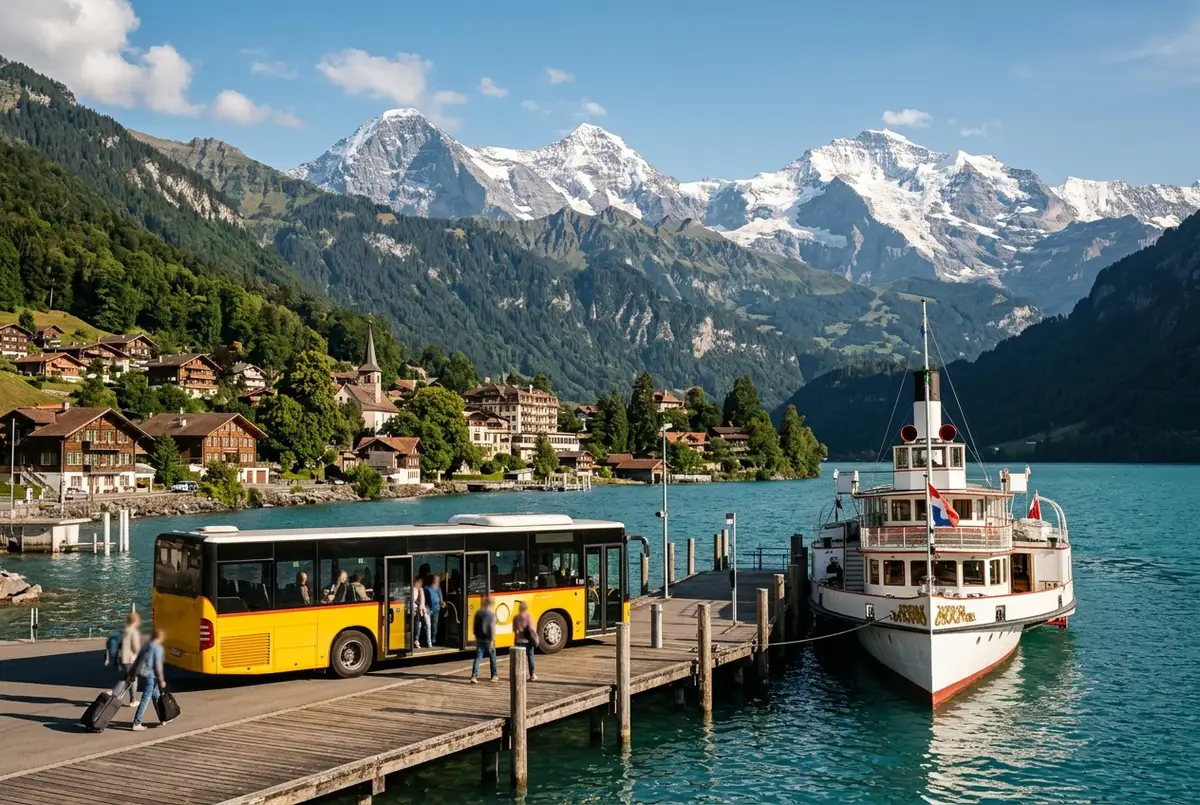
The alpine region around Interlaken, the Jungfrau area, Lakes Thun and Brienz. Bounded by Bern, Lucerne, Montreux and Brig, at least under the Berner Oberland Pass’s own definition. Stay inside that loop for your whole trip and the regional pass covers almost everywhere you’d actually want to go.
BLS, the regional operator, says the pass is valid between those four towns — a handy boundary check before you assume some day trip falls inside (or outside) the region.
How much does a Swiss Travel Pass cost?
The national pass runs from CHF 254 for 3 days (2nd class) up to CHF 499 for 15 days, or CHF 405 to CHF 787 in 1st class. Prices valid until 31 December 2026. It covers the whole country, not one region, and travelers under 25 get 30% off at every duration — CHF 179 for 3 days in 2nd class, for instance.
Full pricing details sit on this listing’s own Swiss Travel Pass ticket, or see the dedicated price breakdown for every duration and class.
How much is a Bernese Oberland pass?
BLS prices the regional pass from CHF 240 for 3 days, 2nd class, dropping to CHF 168 if you already hold a Swiss Travel Pass, Half Fare Card or GA Travelcard. Go longer and it climbs to CHF 435 (full price) or CHF 316 (reduced) for 10 days.
| Duration | Full price, 2nd class | Reduced, 2nd class |
|---|---|---|
| 3 days | CHF 240 | CHF 168 |
| 4 days | CHF 280 | CHF 196 |
| 6 days | CHF 350 | CHF 254 |
| 8 days | CHF 395 | CHF 287 |
| 10 days | CHF 435 | CHF 316 |
That reduced rate applies to anyone already holding a Swiss Travel Pass, Swiss Half Fare Card, Half-Fare Travelcard or GA Travelcard. Exactly the kind of stacking discount most ranking pages conveniently skip over.
Does the Swiss Travel Pass cover cable cars in the Bernese Oberland?
No. The Swiss Travel Pass gives a 50% discount on RailAway mountain excursions nationwide. But the region’s own network of more than 25 mountain railways belongs to the separate Berner Oberland Pass, not something you get free just by holding the national one.
The Swiss Travel Pass and its Flex version only ever discount most mountain excursions by 50%. So if you’re expecting every Bernese Oberland cable car to be free riding on the national pass alone, you’re in for a half-price surprise at the gate.
Is the Swiss Travel Pass really worth it for a Bernese Oberland-only trip?
Honestly? If every day of the trip stays inside the Bern-Lucerne-Montreux-Brig loop, the regional pass wins. It’s cheaper and already includes the area’s trains, buses, boats and mountain railways. The national pass only pulls ahead once you leave that region, since it throws in free museum entry plus travel everywhere else in Switzerland.
Take a reader whose entire trip is five days based in Interlaken, day trips only to Lauterbrunnen, Grindelwald and Thun, never once leaving the BLS pass area. At the reduced rate for Travel Pass holders, a multi-day Berner Oberland Pass covers all of that for less than the equivalent Swiss Travel Pass days would run. Paying for the national pass on top buys nothing extra when the itinerary never crosses that boundary. Nothing.
Which travel pass is best for Switzerland?
Touching several regions? The national Swiss Travel Pass is simpler, and it adds free museums. Never leaving the Bernese Oberland? The regional BLS pass covers the same ground for less, especially once that Travel Pass holder discount kicks in.
| Swiss Travel Pass | Berner Oberland Pass | |
|---|---|---|
| Duration | 3-15 days | 3-10 days |
| Coverage | All of Switzerland | Bern-Lucerne-Montreux-Brig loop |
| Included | Unlimited national network, free museums | Regional trains, buses, boats on Thun/Brienz, 25+ mountain railways |
| Reduced rate | n/a | For Travel Pass/Half Fare Card holders |
Want a comparison that looks outside Switzerland entirely? See how the Swiss Travel Pass stacks up against Eurail and Interrail. Or back up to the Half Fare Card comparison if you haven’t ruled that one out yet.
Questions
Which cable cars are free with a Swiss Travel Pass?
Rigi, Stoos and Stanserhorn, fully included nationwide. But they’re in central Switzerland, not the Bernese Oberland. The region’s own 25+ mountain railways need the separate Berner Oberland Pass, or just a 50% RailAway discount.
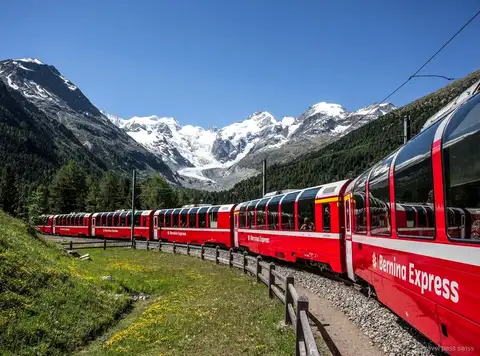
Is Bernina Express free with a Swiss Travel Pass?
The base fare’s covered, sure, but the Bernina Express runs through Graubunden between Chur or St. Moritz and Tirano. Nowhere near the Bernese Oberland region we’re talking about here.
What is not covered by the Swiss Travel Pass?
Mandatory seat reservations on panoramic trains. Most mountain excursions beyond the three fully included ones. Any travel outside the pass’s validity window.
Which mountain excursion is free with a Swiss pass?
Rigi, Stoos and Stanserhorn, the three fully included excursions nationwide. Everything else, including the Bernese Oberland’s own mountain railways, gets discounted or needs a regional pass instead.