Planning a Swiss Travel Pass Itinerary: How Many Days to Cover the Country
A Swiss Travel Pass itinerary built on real pass tiers: how many days Zurich, Interlaken, Zermatt and Ticino actually need, with prices.
A Swiss Travel Pass itinerary fits best when planned around the pass's own 3, 4, 6, 8 or 15 day tiers. A single base like Zurich and Lucerne suits the shortest tier; adding Interlaken, Zermatt or Ticino pushes you up a tier each time.
 Swiss Travel Pass: Unlimited Train, Bus and Boat Travel From $300.97 · Trips with a train, bus or boat most days See dates
On this page 8 sections
A Swiss Travel Pass itinerary works best when you let the pass’s own duration tiers set the shape of the trip. Not the other way round, picking a city list first and hoping it squeezes in. Each region you bolt on tends to push you up a tier.
The pass tiers that shape the trip
Source:SBBHow many days do you actually need for a Swiss Travel Pass trip?
The pass is sold in blocks of 3, 4, 6, 8 or 15 consecutive days, and honestly that tier structure IS the planning tool, more than any city list. A single base city fits the shortest tier fine. Add a second region and you’re usually looking at 6 or 8 days. Treat the day count as a budget to spend on purpose, not a target you’re obligated to fill with extra stops just because the days are sitting there.
“Enjoy unlimited travel on 3, 4, 6, 8 or 15 consecutive travel days.”
SBB, 2026 · source
Can Zurich and Lucerne work as a 3 to 4 day base?
Yes. Good starting point, actually. They sit close enough that both fit inside the shortest tiers, and the network already reaches more than 90 Swiss towns and cities without you ever needing to switch base. City sights, a lake, one mountain excursion day. That’s the shape of it.
Where the itinerary actually runs
Open in Google MapsHow many extra days does the Bernese Oberland need?
Interlaken rewards staying over, not rushing through on a day trip. Rigi, Stanserhorn and Stoos ride free on the pass as part of the region’s included excursions, and each nearby valley genuinely eats a full day if you want to see it properly, not just glance at it from a train window. Tack this onto a Zurich and Lucerne base and you’re usually stepping up to 6 or 8 days. Trying to cram it into a 3 day trip mostly just means regret.
Is Zermatt worth adding to a short itinerary?
Think hard before you bolt Zermatt onto something short. It sits at one end of the Glacier Express, an 8 hour, 291 kilometer one-seat journey if you ride it end to end — getting there and back alone eats close to two full travel days. A 3 or 4 day pass rarely has room for Zermatt AND the Bernese Oberland. Once you’re at 6 days or more, though, it fits naturally.
Does Ticino deserve its own days on the itinerary?
Ticino is the Italian-speaking south, a genuinely separate rail leg from Zurich and Lucerne up north. It belongs on an 8 or 15 day itinerary. Fold it into a short northern-Switzerland trip and it mostly just becomes travel time, which defeats the point of going.
How much of a travel day does a scenic train like the Glacier Express or Bernina Express use?
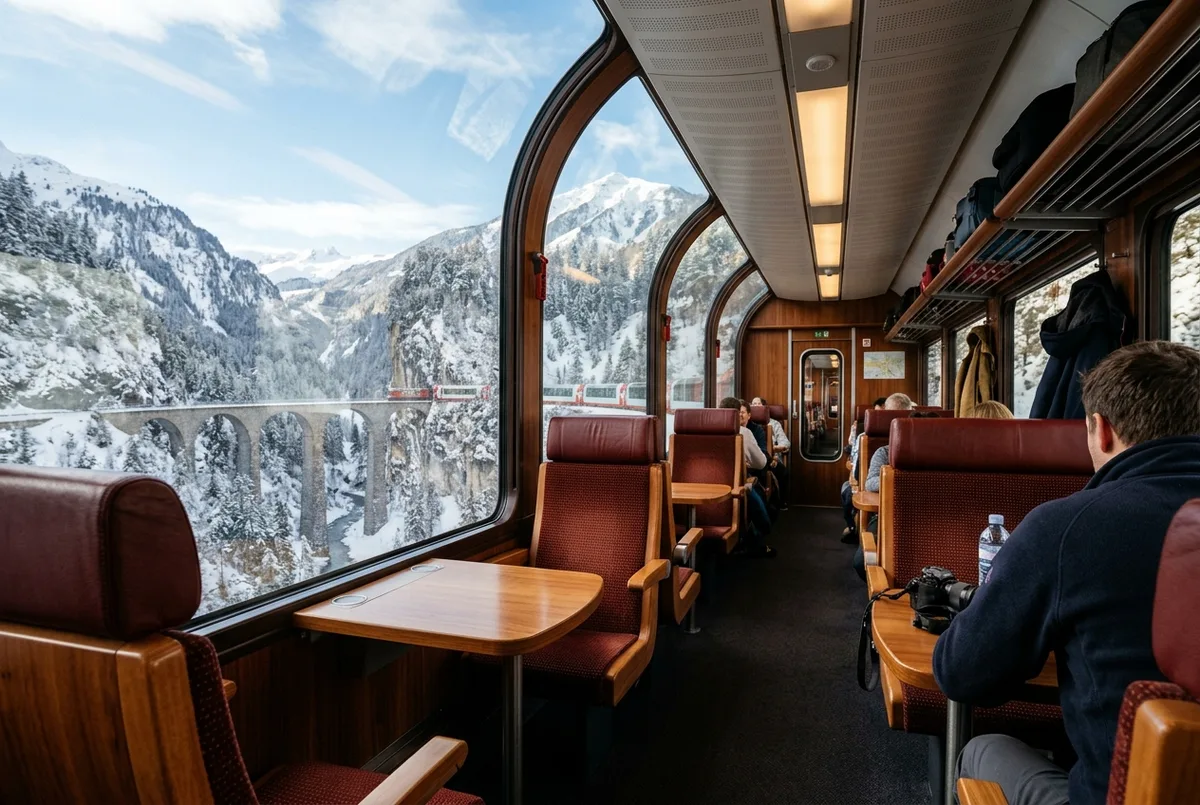
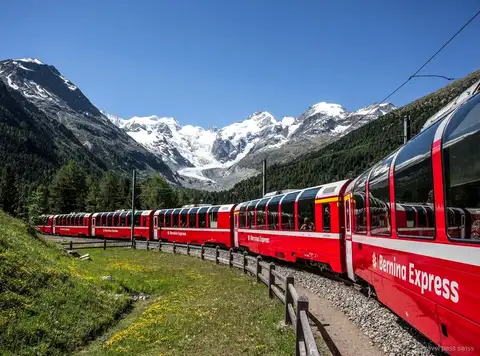
Say you’ve got an 8 day pass and you’re torn: spend one of those days riding the Glacier Express from Zermatt toward Chur, or keep it in Interlaken for a free mountain excursion instead? The numbers settle it pretty quick. The Glacier Express runs about 8 hours end to end over 291 kilometers, and the Bernina Express covers its route in about 4 hours one way across the Bernina Pass. Either one is its own day. Don’t stack city sightseeing on top of it the same morning, that never works out the way people hope.
Which pass duration fits a 7, 10 or 14 day Switzerland trip?
A 7 day trip generally lines up with the 6 day tier, CHF 399 in 2nd class, leaving one rest day outside the pass window. 10 days matches the 8 day tier at CHF 439. 14 days covering four regions matches the 15 day tier at CHF 499. All three straight from SBB’s own ticket shop.
| Region combination | Recommended minimum nights | Matching pass tier | 2nd class price |
|---|---|---|---|
| One base (Zurich and Lucerne) | 3 to 4 | 3 to 4 day | CHF 254 to 309 |
| Two regions (add Bernese Oberland) | 6 to 7 | 6 day | CHF 399 |
| Three regions (add Zermatt or Ticino) | 8 to 10 | 8 day | CHF 439 |
| Full loop (north, Bernese Oberland, Zermatt, Ticino) | 12 to 15 | 15 day | CHF 499 |
For the full price table across every duration and class, see the Swiss Travel Pass price breakdown. Once your dates are set, using your Swiss Travel Pass covers activating it in the SBB app before you leave. Traveling with kids? Who gets a discount is worth a read before you price out the whole trip.
Questions
How many days are enough to visit Switzerland?
Depends how many regions you want, really. A single base like Zurich and Lucerne works fine in 3 to 4 days. Add the Bernese Oberland, Zermatt and Ticino and you’re realistically at 10 days or more.
Which cities should I combine with a Swiss Travel Pass?
Zurich and Lucerne pair naturally for a short trip. Interlaken, Zermatt and Lugano each bring a distinct region, and each works best as its own leg, not a rushed side trip squeezed in.
Can I see Zurich, Lucerne, Interlaken and Zermatt in one week?
Tight, but doable. A 6 to 7 day trip can cover all four if you’re willing to count one scenic train ride as its own travel day rather than trying to sightsee AND cover long distance on the same morning.
Is there a 1 day Swiss Travel Pass?
No. Shortest tier is 3 consecutive days. For an actual single day, that’s the separate Saver Day Pass.